
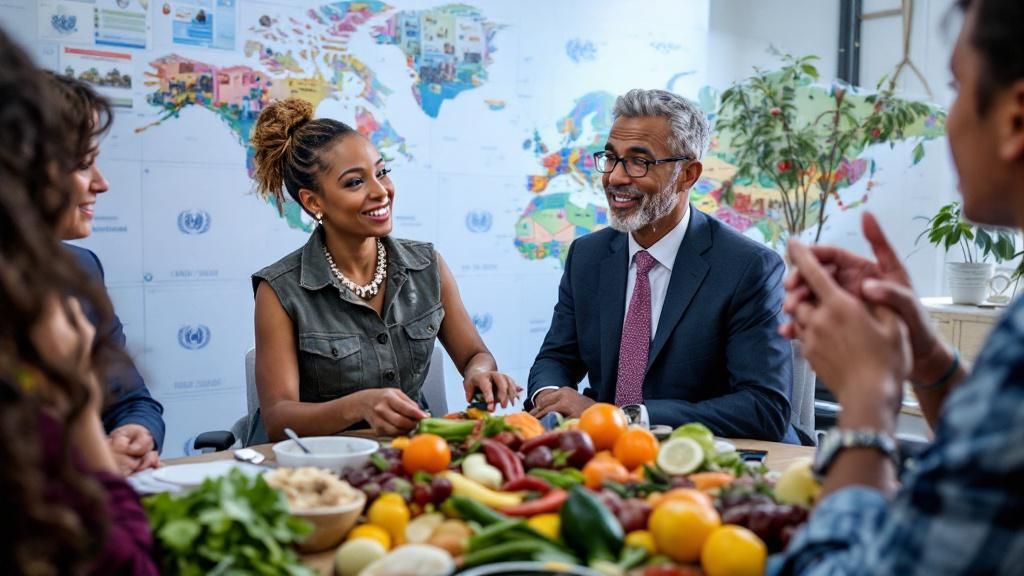
The United Nations has unveiled an ambitious new initiative intended to tackle the persistent global challenges of hunger and poverty that keep impacting millions worldwide. This broad-based scheme marks a pivotal moment in international development, combining novel approaches, substantial financial commitments, and collaborative efforts from member states to produce enduring transformation. The initiative tackles underlying factors whilst delivering short-term support, promising to reshape how the international society approaches these interconnected challenges. Discover how this pioneering method aims to transform lives and create a fairer world.
Worldwide Action on Poverty Crisis
The United Nations’ most recent programme represents a turning point in the global battle with poverty and hunger. By mobilising resources across several continents and engaging both developed and developing nations, the UN aims to establish a coordinated response that transcends conventional limits. This joint effort acknowledges that poverty and hunger are interconnected challenges requiring unified action. The programme unites governments, non-governmental organisations, and private sector partners to guarantee comprehensive coverage and sustainable outcomes across vulnerable regions.
Member states have committed to substantial amounts of collaborative work, committing funding and specialist knowledge to strengthen current initiatives. The project emphasises transparency and accountability, setting specific measures to assess outcomes and effectiveness. By drawing on current systems and building upon successful regional models, the UN works to improve efficiency and minimise duplication of efforts. This coordinated approach ensures that support goes to those with greatest need whilst developing robust frameworks capable of managing future crises successfully.
Immediate Action Plans
The initiative’s immediate phase focuses on emergency relief and swift action in regions experiencing acute food insecurity and extreme poverty. Critical food aid, healthcare support, and temporary shelter programmes are being rolled out to vulnerable areas within weeks. The UN has created rapid-response teams equipped with means to examine ground-level circumstances and adapt measures accordingly. These critical steps aim to save lives whilst sustained strategies are being implemented, guaranteeing vulnerable populations obtain vital assistance swiftly.
Financial funding channels have been streamlined to accelerate aid delivery to frontline organisations active in affected areas. Local community partners and leaders are being enabled to determine urgent requirements and allocate funds effectively. Training programmes for distribution personnel ensure that assistance reaches those it is meant to help whilst maintaining cultural respect and dignity. These swift measures serve as a bridge between emergency response and lasting progress, creating breathing space for communities to stabilise and begin recovery processes.
Long-Term Strategic Objectives
The strategy establishes far-reaching objectives for reducing poverty and food security improvement over the following ten years. Strategic investments in agricultural infrastructure, learning and development, and medical infrastructure aim to target fundamental causes of poverty rather than merely treating symptoms. The UN has undertaken to support small-scale farmers through technology transfer and trading access schemes, helping them to increase productivity sustainably. These foundational investments create pathways for local populations to attain economic independence and economic self-reliance whilst preserving the environment.
Extended success necessitates institutional strengthening and capacity building within national governments and local organisations. The programme prioritises workforce training, administrative enhancements, and broader economic expansion to create robust economic systems capable of endure emerging crises. By fostering entrepreneurship and promoting inclusive growth, the initiative aims to create lasting job prospects. These targeted allocations represent a fundamental shift towards empowering communities to shape their future direction, guaranteeing lasting transformation outside the initiative’s scheduled duration.
Deployment and Collaborative Framework
The UN’s initiative works within a multi-tiered implementation strategy that involves governments, independent organisations, and commercial stakeholders. By creating coordination offices across Africa, Asia, and Latin America, the initiative guarantees culturally appropriate interventions that respond to specific circumstances. This distributed model facilitates quick response ability whilst ensuring oversight from UN headquarters. Collaborations with global development organisations offer essential financial mechanisms, supporting sustainable infrastructure projects that provide work opportunities and enhance food systems systems across at-risk areas.
Success is contingent upon genuine collaboration between developed and developing nations, with transparent accountability mechanisms ensuring resources arrive at intended beneficiaries. The framework encompasses skills development initiatives that reinforce local institutions and empower communities to become self-reliant. Regular monitoring through external reviews and local input mechanisms maintains programme integrity and effectiveness. By building enduring collaborations rather than provisional support arrangements, the UN initiative aspires to create structural transformation that breaks cycles of poverty and hunger, ultimately creating resilient societies capable of sustainable development.
